


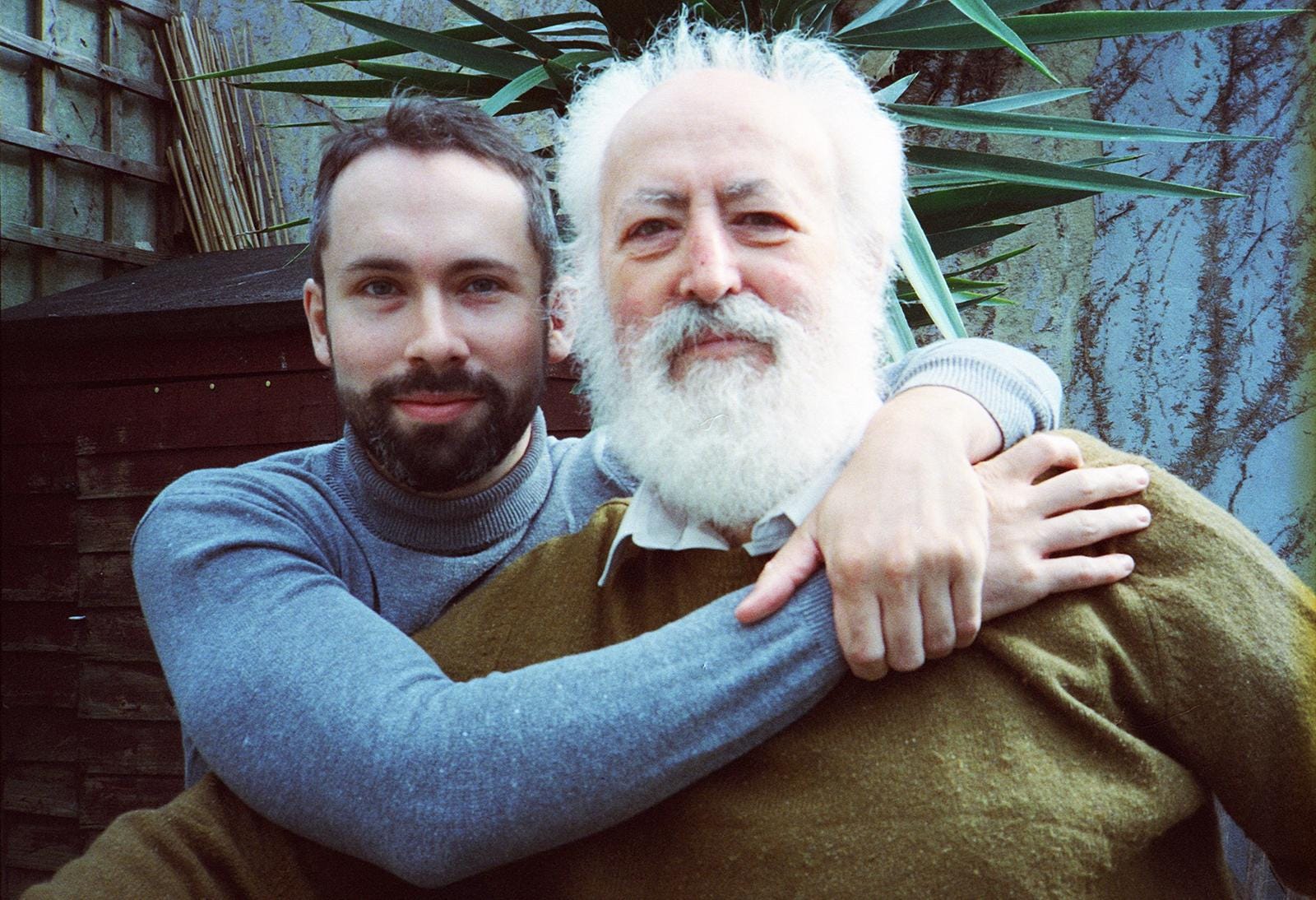
It’s my first Father’s Day without Papa Olesker. I think about him often, but, unsurprisingly, today he’s felt like a constant companion. I enjoy talking about my father - he really was wonderful - and I’m sure I’ll write about him more. But, for now, in memory of him, here’s a snippet of a childhood holiday in which he was a central figure - or, indeed figures, plural…
There’s absolutely no-one in the world like my dad – except once, when there was.
We were in Verona.
It was a summer holiday – our family unit having chaotically made its way from our home in coastal Portsmouth, bickered and snacked our way through a train ride to exotic Stansted, and successfully boarded the plane touching down in northern Italy.
There were my two younger brothers and I; my pragmatic, organised mum, the planner of the trip and of our lives; and there was my freewheeling dad, long-time beneficiary of my mum’s organisational abilities, a man delightfully unconstrained by the need to know what’s happening next, and with a remarkable ability to find delight in whatever’s happening now. His approach to life involved living both in the moment, and in the rich fantasy worlds he would conjure for us, drawn from the infinite pages of the books in his vast study (his career as a university lecturer in English, Creative Writing, Film & Theatre being very much a by-product of his reading, not the other way round). And so our journey to the continent progressed in a golden haze of stories, wordplay, theatrical quotations, command performances of obscure poems, and ad hoc concerts featuring songs so ancient that my father may have been their final living custodian.
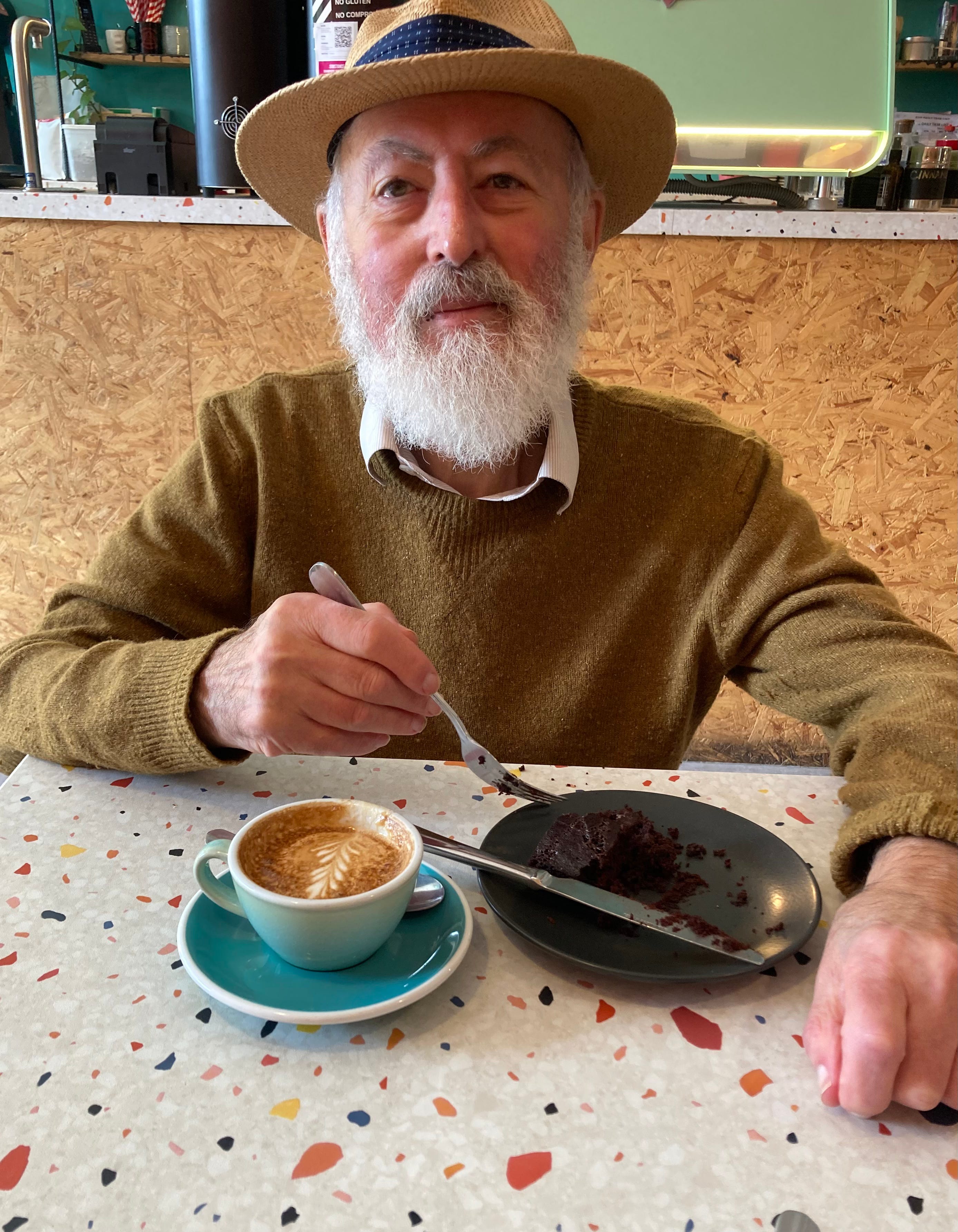
As we emerged from the plane, blinking, into the sunlight, I could see dad via his distinctive silhouette; the outline of his pointed grey beard, his strong Jewish nose, and his wide-brimmed hat. (An inveterate headgear enthusiast, he’d selected a dashing Italian straw hat for this trip, which drew approving nods from the suave gentleman at passport control).
I was fourteen, or thereabouts, meaning my brothers were eleven and six. All of us in stages of our development that favourably overlapped; a happy and harmonious blending of various shades of adolescent and pre-adolescent lunacy, conducive to us being loudly and messily together. It was a great time to be a family at large in a European city.
Our itinerary (my mum’s input) was very loose (my dad’s input), leaving plentiful room for crucial time spent ‘wandering around’. And so we did. We hoovered up obscene quantities of gelato and roamed, stickily, through magical side streets. We sat on the uppermost stone seat of the outdoor coliseum and witnessed Nabucco, Verdi’s opera, a grand spectacle through which we gasped, applauded, and slept (it was long). We read books in parks, dozed in our small bed and breakfast, and looked down from our Juliet balcony onto the narrow road below at the heavy-set men who sat cheerfully smoking, with nowhere in particular to be.
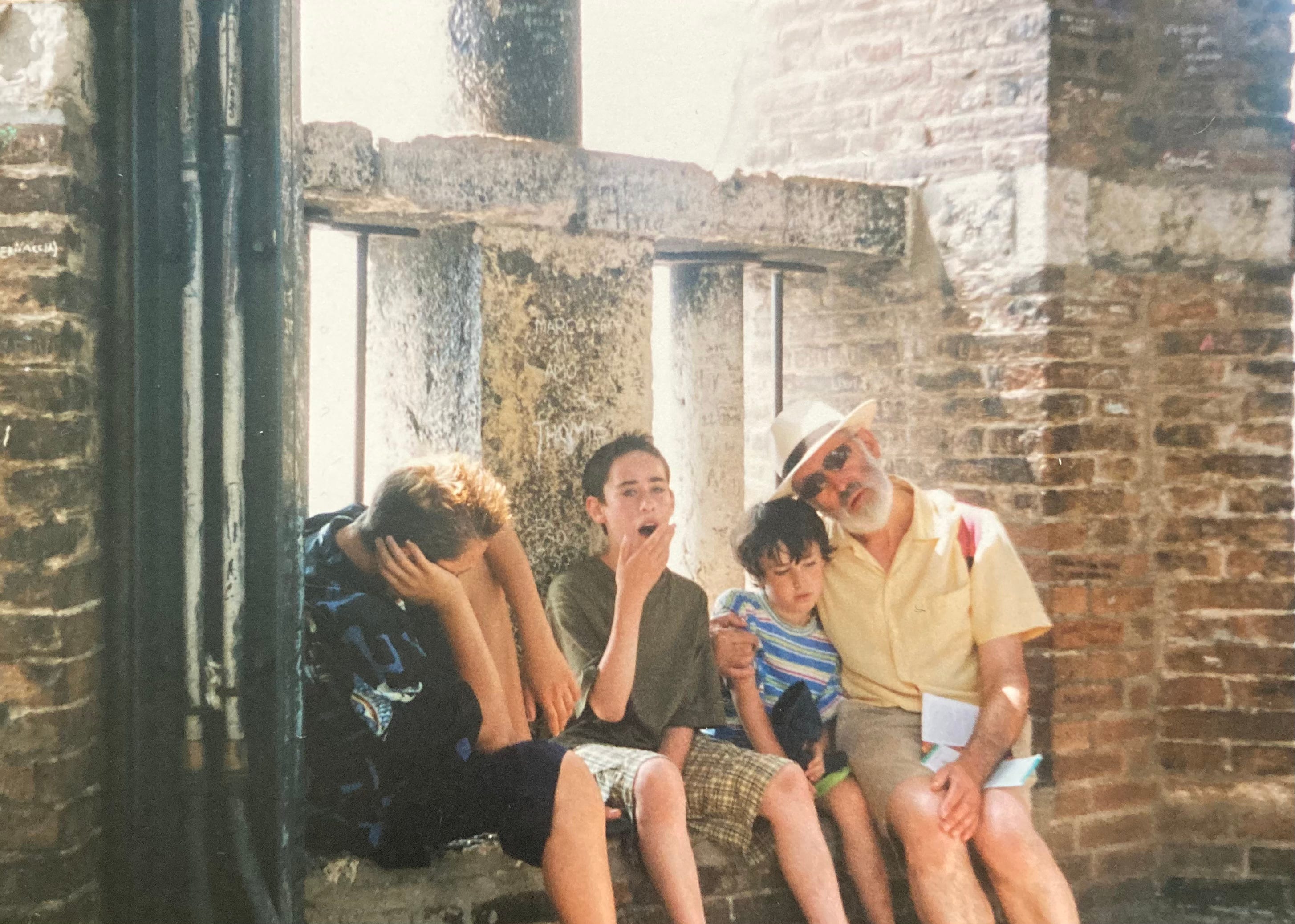
My middle brother and I identified a water park on the edge of the city, and immediately argued that it was of great importance that we both visit.
My dad promptly agreed that the two of us could seek it out, and remarkably my mum – swept up in the heady atmosphere of our relaxed Veronese summer – agreed. My brother and I ventured off together by bus, armed only with a phrase book and my brother’s beguilingly-long eyelashes to extract help from strangers in case of emergencies, and a vague sense of where and when to meet our parents that evening.
After a day spent leaping from the highest slides of a waterpark with an admirably European indifference to health-and-safety standards, we returned, chlorinated conquering heroes, masters of Verona’s (extremely straightforward and user-friendly) public transport system; my dad’s cheerfully freeform parenting methods vindicated.
That evening, we went out for dinner.
And, just as we finished our meal, having sourced a restaurant via our family’s time-honoured method of ‘disagreeing about every menu we pass until eventually attempting to make our way back to the first restaurant we saw, getting lost, and ultimately going somewhere that nobody’s particularly happy with’, we saw him.
It was the smile which caught our eyes first. An infectious theatrical grin, a self-mocking pose, a joyful impression of some imagined character – an expression we’d hitherto seen on only one other face. Then there was the beard.
Now, there are men with shapely grey beards all over the place, but this was something more; the exact shade, the same length, that distinctive, tapering point. And it was more than just the beard - their facial proportions were almost identical. The strong nose. The twinkling eyes. A Panama hat!
Across the road from us was a man who didn’t just look like our dad, he seemed to be our dad; a kindred spirit, a man with silliness at his very core.
Our collective reaction rapidly shifted, from ‘mildly amused recognition at the sight of another grey bearded man’ to a state of genuine, enthralled, excitement. This was something special.
And what’s more, across the road, the same thing happened! The other man, who was – of course – animatedly telling a silly story to the group around him, clocked us, and his apparent twin.
And he pointed, delighted, at my dad, and burst out laughing.
And my dad did the same!
Instinctively they approached one another, pointing, exultant - our two groups watching on.
They reached one another, grasped each other’s arms in a warm greeting… and then attempted to communicate.
It’s worth noting at this point that, although my dad had a feel for languages, and would immediately and ambitiously attempt a full-blown conversation in any country in which he set foot, relying mainly on gut instinct and an array of accents ranging anywhere from the brilliant to the slightly offensive, in truth he spoke only a fraction of Italian.
And this beaming man, we discovered, spoke little-to-no English.
But they both – mirrors of one another – spoke the language of extroversion.
They chattered, and laughed, and began – of course – improvising some sort of nonsensical mirror-mime together.
I raised our camera to capture this extraordinary moment. And then… I couldn’t.
Some context. This was the age of the film camera, when each shot was optimistically composed, hastily snapped, and then promptly forgotten about, until such time as one’s memories were dredged up, generally months later, by the mysterious dark-room attendants at Boots.
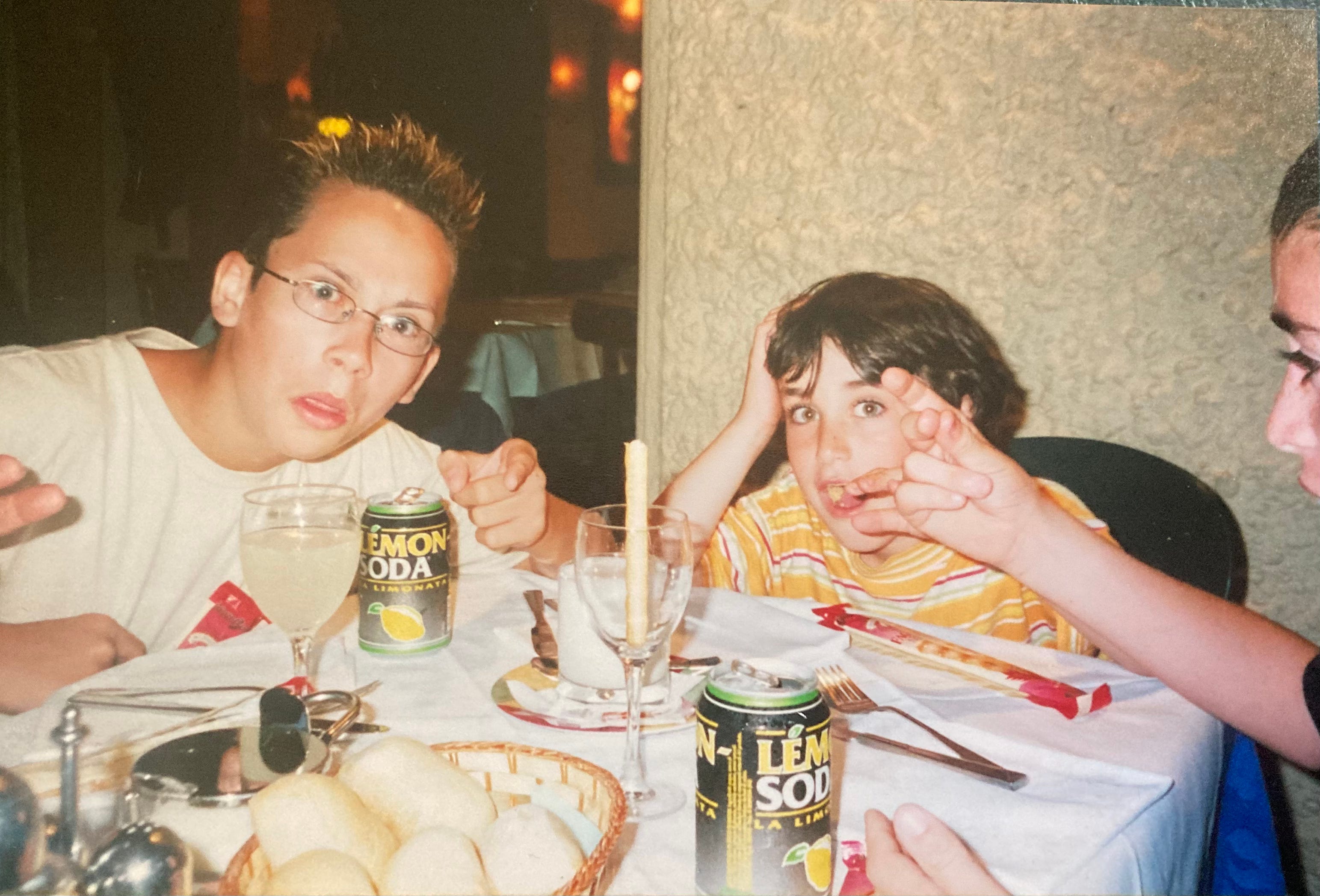
As we had sat down for dinner, minutes before, one of my brothers had done the seemingly impossible – placed a breadstick in a wineglass, and somehow managed to balance it upright. It was, clearly, a momentous, important achievement - and one, I decreed, winding the film along to its final shot and handing it to my mum, was obviously worth capturing for posterity. Click.
And so, as we stood in the street, agape at my dad and his doppelgänger, singing, hugging, posing, when I raised the camera to my eyes and attempted to capture this moment… there was no click. I thought ruefully of the breadstick, and pocketed the camera.
Our groups went to part ways, but such was the instant bond we’d formed with this man, and his smiling family, that we knew a simple goodbye wouldn’t suffice. We couldn’t simply wave goodbye and proceed with our lives.
Instead, we endeavoured to communicate, via watch-pointing and hand signals, that we would all meet back, tomorrow, at the same spot, and the same time. Then, we vowed, we would bring a camera, we would dine together, we would learn more about one another’s lives.
The next afternoon, I bought another roll of film, and carefully loaded it into the camera. And, that evening, we returned to our spot. We waited, as the sun gradually set. But nobody came.
I don’t much go in for regrets.
But, as I look at that photograph of the levitating breadstick, I recall the meeting of souls that took place moments afterwards.
And I think of the beard, and the smile, and the hat.
And I wish I could see him again.
Originally published in Issue 6 of the brilliant Paperboy Magazine
Hello Max, This is lovely - so touching - and I very much look forward to more of your writing about your wonderful Dad. He was an amazing man.... as of course you know. I worked with him at PU, but have only just found out about his passing this week. I've written a letter to your family to the last address I had for Stuart in Southsea, so I hope it arrives safely. Do let me know where else I might send it if there's been a change of address. Wishing you all the best. Stuart must have been so proud of you!
Thank for for sharing this and your Dad with us. I studied at Portsmouth with him, and didn't realise he was gone. He was a beaut.